

 GBP
GBP
 EUR
EUR
 SEK
SEK
 NOK
NOK
 DKK
DKK
 USD
USD
Vincent van Gogh
66 Items
 Vincent van Gogh - Starry Night 1888 Canvas printfrom £31.99
 Vincent van Gogh - Café Terrace at Night Canvas printfrom £31.99
 Canvas Print van Gogh - Almond Blossomfrom £31.99
 Poster van Gogh - Café Terracefrom £9.99
 Round wall mural van Gogh - Almond Blossom Ocher - non self-adhesive/self-adhesive wallpapersfrom £24.99
 van Gogh - Starry Night 1888 Glass artfrom £89.99
 Round wall mural van Gogh - Almond Blossom rosé - non self-adhesive/self-adhesive wallpapersfrom £24.99
 Round wall mural van Gogh - Almond Blossom (blue version) - non self-adhesive/self-adhesive wallpapersfrom £24.99
 van Gogh - Starry Night Canvas printfrom £31.99
 van Gogh - Starry Night 1889 Glass artfrom £89.99
 Wall Circle Wood van Gogh - Almond Blossom (ocher)from £31.99
 Alu-Dibond Wall Circle van Gogh - Almond Blossom in Ocherfrom £41.99
 Vincent van Gogh - Sunflowersfrom £31.99
 Vincent van Gogh - Auversfrom £31.99
 Round wall mural van Gogh - Almond Blossom (crème) - non self-adhesive/self-adhesive wallpapersfrom £24.99
 Textile poster van Gogh - Almond blossom autumnal - Panoramafrom £29.99
 Alu-Dibond Wall Circle van Gogh - Almond Blossom in Light Pinkfrom £41.99
 Van Goghs Terrace - Wall Muralfrom £70.99
 Wall Circle Wood van Gogh - Almond Blossomfrom £31.99
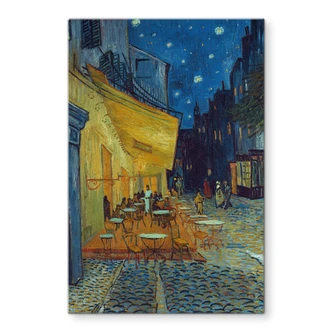 Vincent van Gogh - Café Terrace at Night Glass artfrom £89.99
- -17%
 Acrylic Glass - van Gogh - Almond Blossom
£47.99from £39.99 
 Wall Circle Wood van Gogh - Almond Blossom light pinkfrom £31.99
 Vincent van Gogh - Cypress Treesfrom £31.99
 Textile poster van Gogh - Almond blossom ochre - Panoramafrom £29.99
 Alu-Dibond Wall Circle van Gogh - Almond Blossomfrom £41.99
 Canvas Print Van Gogh - Wheatfield with cypressesfrom £31.99
 Textile poster van Gogh - Almond blossom - Panoramafrom £29.99
 Textile poster van Gogh - Almond blossom rosé - Panoramafrom £29.99
 Round wall mural van Gogh - Almond Blossom (black version) - non self-adhesive/self-adhesive wallpapersfrom £24.99
 Glass Print van Gogh - Almond Blossomfrom £79.99
 Wall Mural Van Gogh - Wheatfield with cypressesfrom £52.99
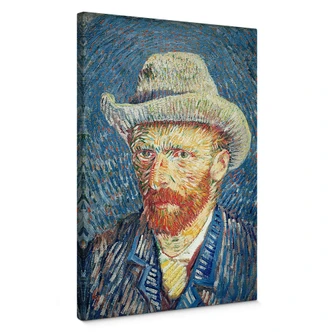 Vincent van Gogh Self-portrait Canvas printfrom £31.99
 Acrylic print van Gogh - Almond Blossom - Panoramafrom £69.99
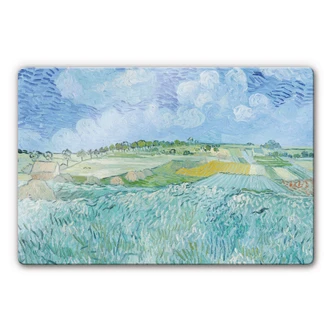 Vincent van Gogh - Plain near Auvers Glass artfrom £79.99
 Wall Circle Wood van Gogh - Almond Blossom creamfrom £42.99
 Round wall mural Van Gogh - Wheatfield with cypresses - non self-adhesive/self-adhesive wallpapersfrom £24.99
 Alu-Dibond Wall Circle van Gogh - Almond Blossom Creamfrom £41.99
 Wall sticker Van Gogh - Wheatfield with cypressesfrom £24.99
 Textile poster van Gogh - Café terrace in the eveningfrom £19.99
 Round wall mural van Gogh - Café Terrace at Night - non self-adhesive/self-adhesive wallpapersfrom £24.99
 Textile poster van Gogh - Almond blossom cream - Panoramafrom £29.99
 Poster Van Gogh - Wheatfield with cypressesfrom £9.99
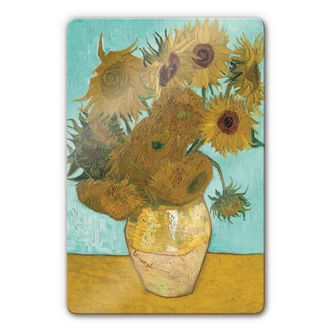 van Gogh - Sunflowers Glass artfrom £79.99
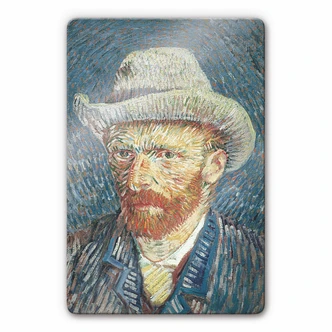 van Gogh - Self-portrait Glass artfrom £79.99
 Alu-Dibond Wall Circle van Gogh - Almond Blossom (black)from £41.99
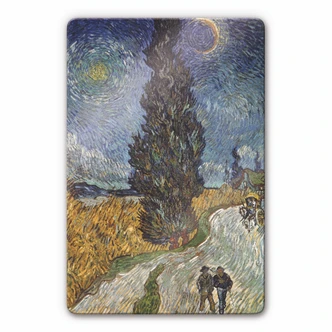 van Gogh - Road with Cypress and Star Glass artfrom £89.99
- -17%

 Acrylic print van Gogh - Almond Blossom Ochre
£47.99from £39.99 
 Alu-Dibond Wall Circle Van Gogh - Wheatfield with cypressesfrom £21.99
 Poster Van Gogh - Wheatfield with cypressesfrom £11.99
.jpg "Poster van Gogh - Café at Night")
 Poster van Gogh - Café at Nightfrom £14.99
Poster van Gogh - Café at Nightfrom £14.99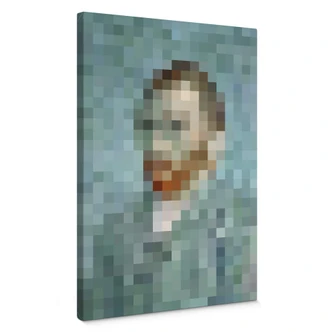 Canvas Print – van Gogh – Self portrait 1from £31.99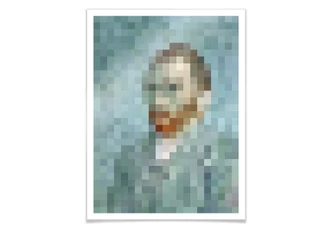
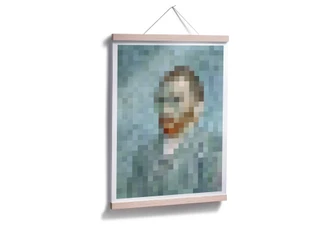 Poster Pixelart – van Gogh – self portraitfrom £9.99
- -17%
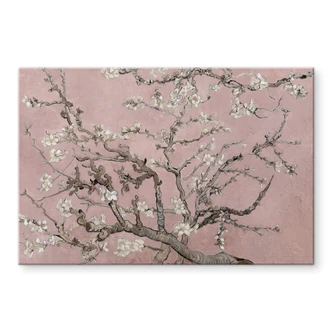
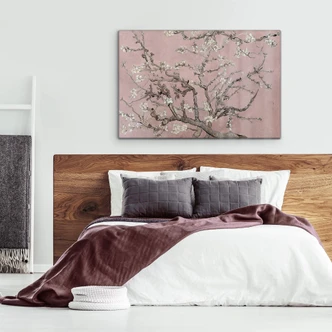 Acrylic print van Gogh - Almond Blossom Rosé
£47.99from £39.99 
 Glass Print Van Gogh - Wheatfield with cypressesfrom £39.99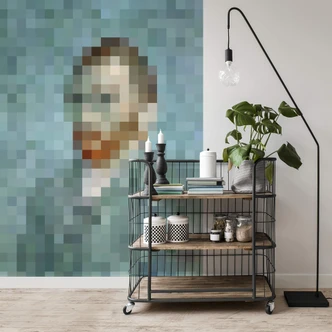
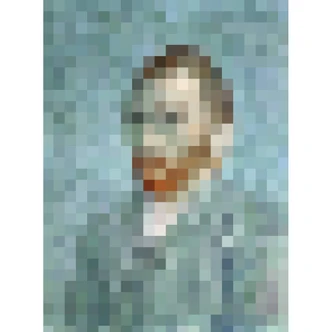 Wall Mural Van Gogh Pixelart£63.99*
 Glass Print Van Gogh - Wheatfield with cypressesfrom £54.99
 Acrylic print van Gogh - Almond Blossom Rosé - Panoramafrom £69.99
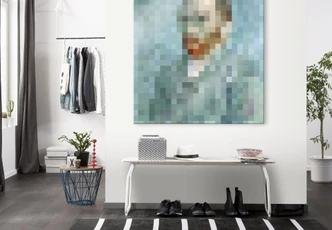 Acrylic Print Pixelart van Gogh - Self-portraitfrom £39.99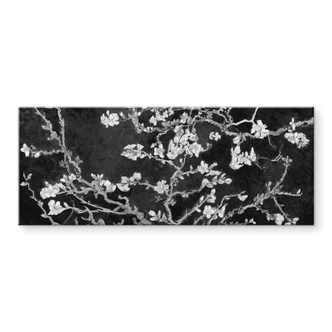
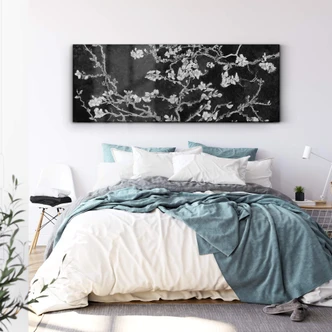 Acrylic print van Gogh - Almond blossom - black - Panoramafrom £69.99
 Wooden Poster Van Gogh - Wheatfield with cypressesfrom £26.99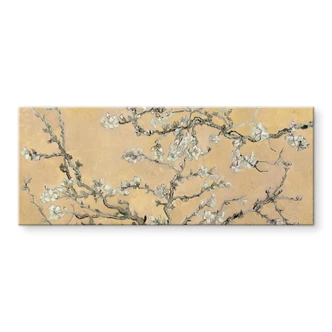
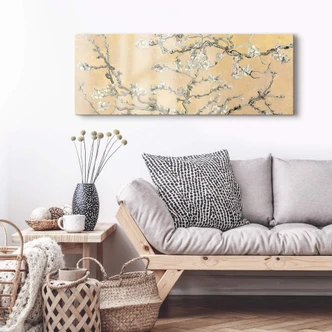 Acrylic print van Gogh - Almond Blossom Cream - Panoramafrom £69.99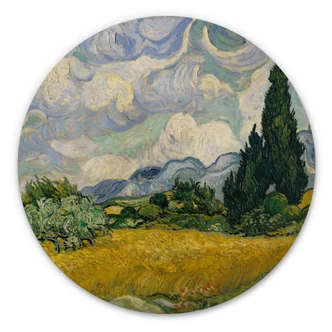
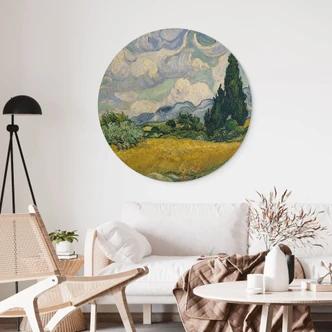 Wall Circle Wood Van Gogh - Wheatfield with cypressesfrom £21.99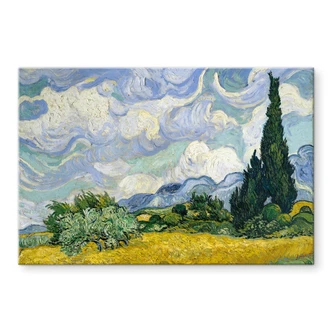
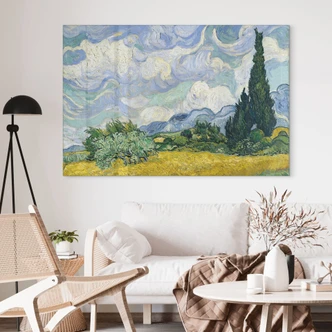 Acrylic Print Van Gogh - Wheatfield with cypressesfrom £39.99
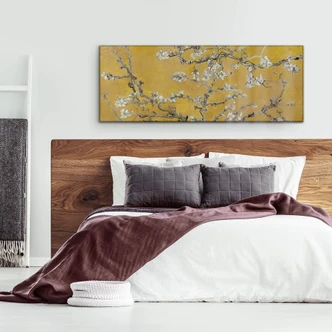 Acrylic print van Gogh - Almond Blossom Ochre - Panoramafrom £69.99
 Acrylic print van Gogh - Almond blossom - blackfrom £39.99
- -17%
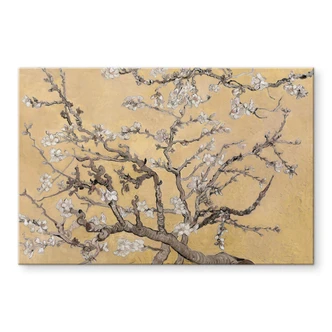
 Acrylic print van Gogh - Almond Blossom Cream
£47.99from £39.99
Vincent van Gogh – Images from another world
The Dutch painter Vincent van Gogh is considered a co-founder of modern art with his characteristic painting style. Works such as Sunflowers and Starry Night are world-famous. But as colourful as his pictures were, the painter's life was tragic. Nevertheless, van Gogh, along with famous fellow painters such as Paul Gaugin and Pablo Picasso, shaped the dawn of modern painting.
Vincent van Gogh – genius and madness shaped his life
Vincent Willem van Gogh was born on 30 March 1853, the son of a pastor in Groot-Zundert in the Netherlands. Van Gogh received a Christian education with his five siblings and began training in his uncle's art studio in The Hague in 1869. After working in Paris and London for several years after completing his training, van Gogh handed in his notice in 1876 and tried his hand at being a teacher, salesman and preacher in the following years. In 1880, at the age of 27, Vincent van Gogh finally decided to become a painter.
In order to improve as an artist, van Gogh moved to Brussels in 1880. There he sought contact with other artists in order to exchange ideas with them. After the death of his father in March 1885, van Gogh moved to Antwerp. There he took courses at a private art school for a few months, where he met numerous other painters such as Paul Signac and Paul Gaugin.
After van Gogh moved to Arles in the countryside in February 1888, more and more darkness entered his life. After an argument with his friend Paul Gaugin, van Gogh cut off a large part of his left ear at the end of 1888. When further nervous breakdowns followed, van Gogh decided to stay in a mental hospital. Nevertheless, his physical and mental health continued to deteriorate. On 27 July 1890, for reasons that are still unclear today, van Gogh shot himself in the upper body and died of his injuries two days later.
Van Gogh's development as a painter
At the beginning of his career as a painter, van Gogh did not receive any significant instruction. He taught himself the majority of his artistic skills. In the first half of the 1880s, van Gogh lived in Holland and Belgium. At that time, van Gogh's Dutch compatriots, such as Rembrandt or Frans Hals, influenced his painting style. Chiaroscuro techniques, rough and visible brushstrokes, and a fast painting style that left out details characterised this creative period.
In 1886, Van Gogh was drawn to Paris for a few years. This time shaped the artist's painting style emphatically. Here he came into contact with the contemporary painting style, Impressionism. Even though he was not convinced by this painting style as a whole, with its shapeless image design, soft colour transitions and light colour application, Van Gogh adopted some elements into his own painting repertoire. Short, comma-shaped brushstrokes characterised the Dutch artist's paintings from that time onwards. His pictures became brighter and more colourful. Japonism had a further formative influence on van Gogh's artistic work. Curved lines, contrasting empty spaces, a schematised picture structure and a two-dimensional picture plane are characteristic of this art style.
After van Gogh moved to Arles in 1888, the painting style that is now considered ‘typical’ of van Gogh finally emerged. He used strong, undiluted colours, which he applied to the canvas in a rapid manner to capture intensity, vibrancy and feelings in his pictures. He neglected detail in favour of a greater overall effect and did not intend to depict visible reality in his pictures. Rather, Van Gogh was concerned with conveying the essence of his motifs and the emotions associated with them.
A selection of famous Van Gogh pictures
In his relatively short creative period from 1880 to 1890, Vincent van Gogh produced 864 paintings and over 1000 drawings.
Van Gogh painted the picture entitled Café Terrace at Night in 1888. The complementary contrast of the blue-black starry sky and the street café illuminated in bright yellow tones is not limited to the colours. With this motif, Van Gogh expresses the simultaneity of different realities. On the one hand, the nightlife, where people are bustling about or idly lingering. On the other hand, the infinite vastness of the universe, which exists and persists independently of human activity.
The painting Sunflowers was also created in 1888. Here, too, colour contrasts shape the picture. The cool turquoise in the background makes the warm yellow and brown tones of the sunflowers stand out clearly. The influence of Japanese art on van Gogh's painting style can be seen in the simple forms and the fine outlines of the motifs.
Van Gogh's painting Starry Night from 1888 represents his painting style that is considered ‘typical’ today, with its characteristic short brushstrokes. Their curved, swirling arrangement creates a sense of restlessness and movement, contrasting with the depiction of the quiet nocturnal landscape.
In the painting Almond Blossom, the Japanese influences on Van Gogh's painting style are clearly evident. A limited image detail of the motif, a fixed colour border and a missing horizon line are original elements from the Japanese Ukiyo-e painting style. Van Gogh also worked with contrasts in this painting. The bright white flowers stand out strikingly against the dark, gnarled branches and the grey-blue sky.
The right way to display a Van Gogh
Pictures by Vincent van Gogh evoke emotions. The characteristic painting style and contrasting colour selection are highly recognisable. However, it is not only the subject of a picture that creates an effect, but also how it is presented. Whether on a canvas in your own home or as a representative glass picture in your office: van Gogh art prints attract attention. Even a van Gogh poster can attract attention when displayed in the right frame.
The location where a painting is displayed is also important for its effect. With nails for gluing, the place for the van Gogh can be determined flexibly and without drilling. A picture rail on which the picture is placed can also have a refreshing effect in a room. While a glass picture appears discreet and rather ‘soft’, a motif on a wall mural has a powerful and dominant effect on a room. The motif, the picture carrier and the type of mounting interact with the atmosphere and the rest of the room's furnishings.
Another aspect that should not be neglected in connection with the effect of a picture is the appropriate picture format. Instead of the classic rectangular or square picture format, we also offer round or extra-wide panorama picture formats. The size of a picture also has an influence on its effect in a room. We offer most of our pictures in several sizes. We are happy to help you with the selection.


